



Get in touch with our expert team today. 01902 754 525.
Is Invisalign worth it?
Straightening teeth as an adult usually comes down to one question: is a clear aligner worth choosing over a traditional metal brace? For patients weighing up Invisalign at Claregate Dental in Tettenhall, Wolverhampton, the answer depends on the case, the budget, and how much the day-to-day experience of wearing a brace matters.
This guide sets out how Invisalign works, what it costs, where it has genuine advantages over wire braces, and where it doesn’t fit every case.
How Invisalign works
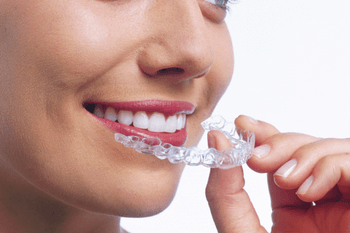
Invisalign uses a series of clear, custom-made aligner trays instead of metal brackets and wires. A 3D scan of the mouth is taken first. That scan is used to plan the full course of treatment and to map how the teeth will move, tray by tray, before any aligners are made.
Each tray is worn for one to two weeks before being swapped for the next in the series. The aligners need to be in for 20 to 22 hours a day to keep treatment on track, which leaves enough time for them to come out for meals, brushing, and flossing. That’s a genuinely different experience from a fixed brace, which stays on the teeth for the full length of treatment.
Where Invisalign has an edge over metal braces
- Discretion. The trays are made from a clear plastic that’s difficult to spot unless someone is looking closely. For adults who don’t want a visible brace at work, or teenagers who are self-conscious about their smile, that matters more than any other factor.
- Comfort. There are no wires or brackets to irritate the cheeks or gums. Most patients find the transition between tray sets far less uncomfortable than a tightening appointment with a fixed brace.
- No food restrictions. Because the aligners come out to eat, there’s no need to avoid the foods that damage brackets and wires, such as nuts, toffee, or corn on the cob.
- Easier to keep clean. Trays are removed before eating, so food doesn’t get trapped behind wires. Rinsing the tray and brushing it gently twice a day is usually all that’s needed.
- Fewer appointments. Aligner checks are typically needed every four to six weeks, compared with the more frequent adjustments a fixed brace often requires.
- Minimal effect on speech. A short adjustment period with any new appliance in the mouth is normal, but most Invisalign patients report no lasting change to how they speak.
What to weigh up before starting
Invisalign isn’t automatically the right choice for every case, and it’s worth being realistic about a few things before committing.
- Wear time is non-negotiable. Results depend on the trays being worn for 20 to 22 hours a day. Patients who know they won’t keep to that, because of shift work, sport, or simply forgetting, may get better, more predictable results from a fixed brace.
- Case complexity matters. Invisalign now treats a wide range of cases, from minor crowding to more involved bite corrections, but severe misalignment can still call for traditional braces or a combination of approaches. A consultation and scan will confirm which category a case falls into.
- It costs more than a standard NHS brace. Invisalign isn’t available on the NHS for adults, and even for eligible under-18s, NHS orthodontics is usually a fixed wire brace rather than clear aligners.
What Invisalign costs at Claregate Dental
Claregate Dental is one of a small number of Premier Invisalign providers in the Wolverhampton area, with treatment starting from £3,500.
What’s included
- Free consultation and 3D scan
- All aligners, attachments, and refinements needed along the way
- Face-to-face review appointments
- Final retainers
- Complimentary teeth whitening
Treatment typically runs from 6 to 18 months, with review appointments roughly every four weeks, and the cost can be spread over 12 months or longer through third-party finance.
For context, Invisalign pricing across the UK generally sits between £1,500 for the most minor cases and £5,500 for complex, comprehensive treatment, so Claregate’s starting price is in line with the mid-to-upper end of that range, reflecting the level of case complexity the practice typically takes on and what’s included in the package.
Invisalign versus traditional braces, at a glance
| Invisalign | Traditional braces | |
|---|---|---|
| Visibility | Barely noticeable | Clearly visible |
| Removable | Yes, for eating and cleaning | No, fixed for the duration |
| Diet restrictions | None | Several foods to avoid |
| Comfort | Smooth plastic, no wires | Can cause irritation from brackets and wires |
| Appointments | Roughly every 4–6 weeks | Often more frequent |
| NHS availability | Not available for adults | Available for eligible under-18s |
| Suitability | Minor to moderately complex cases | Suitable for the widest range of cases, including the most complex |
Is Invisalign worth it?
For patients who want a straighter smile without a visible brace, who can commit to wearing the trays for the recommended hours each day, and whose case suits clear aligner treatment, Invisalign tends to be worth the investment. The discretion, comfort, and flexibility it offers over a fixed brace are the main reasons patients choose it.
It isn’t automatically the cheaper or the faster option, and it isn’t suited to every case. The most reliable way to know whether it’s the right fit is a consultation and 3D scan, which will show exactly what treatment would involve and what results to expect.
Book an Invisalign consultation at Claregate Dental
Claregate Dental offers a free Invisalign consultation and 3D scan for patients in Wolverhampton and the surrounding area. To find out whether Invisalign is suitable and what it would cost, get in touch on 01902 754 525 or visit the practice at 65 Pendeford Avenue, Tettenhall, Wolverhampton, WV6 9EH.